
The pages listed below give advice on dealing with various parts of the property in line with their listed building status. Along with each data sheet you will find, where possilbe, links to the resources you might need when carryoing out works. Steps,-Platts-and-Arches Ironmongery Solving Rising Damp Problems Solving Condensation Problems
Category: Heritage Guide
The Heritage Homes Guide
Dampness
Why Important Moisture is always present in buildings, and certain levels of natural moisture are necessary to keep the building fabric in a stable condition. The moisture content varies widely with the type of material, ranging from 1 per cent for plaster to 20 per cent for timber. The term ‘dampness’ is reserved for conditions …
Cupolas
Why Important Cupolas are a feature of the Georgian period and Edwardian period and are a very elegant way of letting light down through the centre of the building, usually to a stairwell. They are often elliptical or round in plan and constructed of a timber kerb with thin timber astragals bridging from the kerb …
Cornices
Why Important Many Georgian, Victorian & Edwardian buildings have cornices. These carved stone projections at the top of the wall have a significant bearing on the appearance of the façade and are thus very important to maintain, or replicate, and reinstall when missing. What to look for Cornices are always made from ashlar stone and …
Condensation
(including Chimney Breast Dampness) Why Important Dampness from condensation usually affects the whole area of walls, ceiling and floor, unlike the patchiness of penetrating or rising damp, but can be confined to isolated pockets of cold, stagnant air (behind pictures, wardrobes, etc.) What to look for Condensation occurs when warm, moist air comes into contact …
Concealment
Why Important What to look for How to fix Concealment of damp areas is not recommended, but may occasionally be acceptable if the enclosed space is ventilated. A plasterboard lining on battens is the simplest method of concealment, but all battens must be pressure impregnated with a non-staining, inodorous preservative and both the wall surface …
Common Stairs
Why Important These are a common feature of Georgian buildings and are included in the guide as they are a public space. What to look for The stair wall is split by a dado line between a lower gloss painted area and the upper matt painted area. This upper area would have originally been painted …
Common roofing issues
Introduction What to look for What to do if you find a problem Avoiding creating problems Historical background
Commercial Properties and Shops
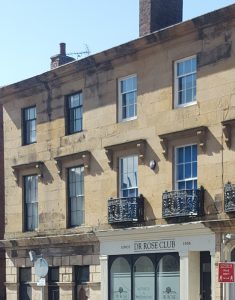
Commercial premises and shops have a long tradition of having their facades painted to draw attention to themselves and to advertise what they sell. This tradition still continues today, but where it does happen, it is important that the harmony and unity of the whole facade, including such aspects as lettering and signage, is maintained. …
Chimneys
Why Important Chimneys are an important part of the Birkenhead skyline throughout the Birkenhead Heritage Area. Each room in a traditional property would have had an open fire, as this was the only means of heating them. What to look for Flues were generally built into the thick masonry party walls and gathered at roof …